

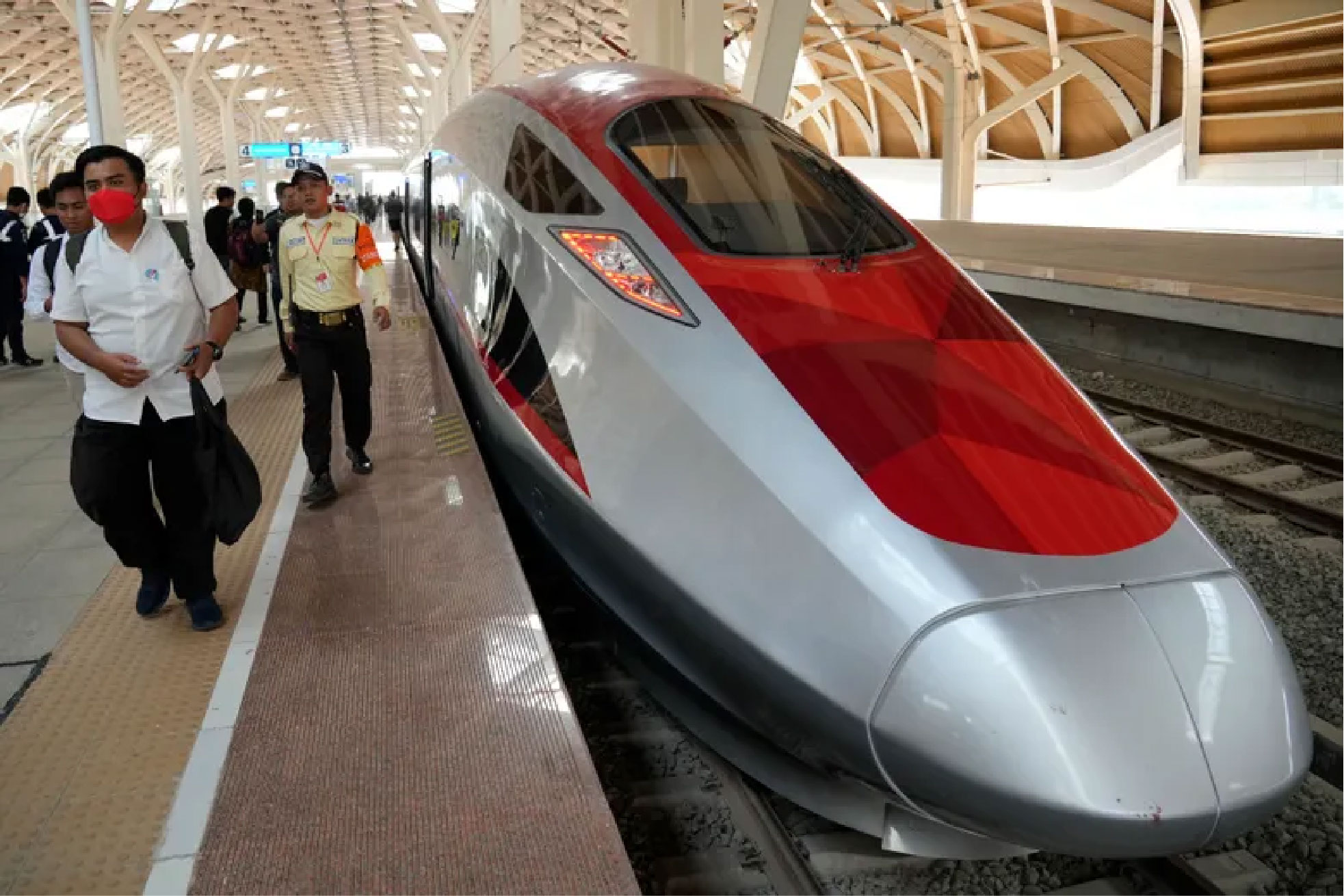
Indonesia is gearing up to unveil Southeast Asia’s inaugural high-speed bullet train, marking a significant milestone in transportation infrastructure. This $7.3 billion project, a crucial component of China’s Belt and Road initiative and predominantly backed by Chinese state-owned enterprises, officially welcomed passengers on Sunday.
This groundbreaking railway system links the capital city, Jakarta, with Bandung, a vibrant cultural and artistic center in West Java, Indonesia’s second-largest city. Spanning an impressive 86 miles (138 kilometers), this high-speed rail, officially named WHOOSH (an acronym for “time saving, optimal operation, reliable system” in Indonesian), operates on clean electricity, producing no direct carbon emissions. It races along at an impressive speed of approximately 217 miles per hour, drastically reducing the travel time between Jakarta and Bandung to under an hour, a sharp contrast to the previous three-hour journey, as authorities have noted.
This remarkable feat is under the careful supervision of the collaborative entity PT Kereta Cepat Indonesia China (PT KCIC) and stretches from the Halim railway station in East Jakarta to the Padalarang railway station in West Bandung. Notably, the high-speed rail system is seamlessly integrated with various public transportation hubs, enhancing accessibility and convenience for passengers.
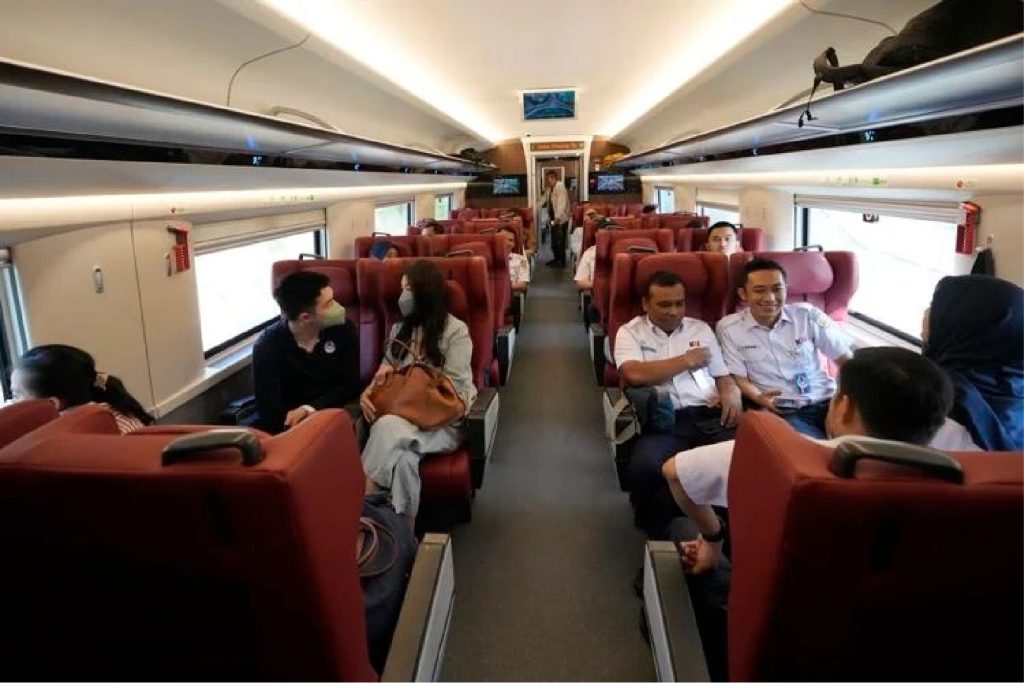
Moreover, the trains have been thoughtfully adapted to thrive in Indonesia’s tropical climate, and they boast a cutting-edge safety system capable of responding to emergencies such as earthquakes and floods, ensuring passenger well-being and security.
In a notable meeting held in July, Indonesian President Joko Widodo and his Chinese counterpart, Xi Jinping, unveiled a slate of ambitious projects. Among these initiatives, there are plans for the construction of a multi-billion dollar Chinese glass manufacturing facility situated on the island of Rempang, which forms a part of Indonesia’s Riau Islands Archipelago. This project is integral to the establishment of a new ‘Eco-City.’
However, the announcement of this venture ignited weeks of vehement protests from indigenous islanders who strongly oppose the demolition of their villages to make way for the factory. The clash between development interests and concerns for the well-being of local communities has intensified the debate surrounding these ambitious undertakings.
Discussions are underway regarding the expansion of the high-speed rail line to Surabaya, a prominent port city and the capital of East Java Province. This significant development was revealed by PT KCIC director Dwiyana Slamet Riyadi during a ceremony held earlier in September, as reported by Chinese state media outlets.
The envisioned expansion project contemplates including stops in other major cities such as Semarang and Yogyakarta. Yogyakarta serves as the gateway to Borobudur, the world’s largest Buddhist temple, adding cultural and historical significance to the expansion plans, as Dwiyana explained.
As per the details provided by PT KCIC, the railway comprises eight cars, each thoughtfully equipped with modern amenities including Wi-Fi connectivity and USB charging points. This passenger-friendly setup accommodates a total of 601 passengers.Photographs of President Widodo and Chinese Premier Li Qiang taking test rides on the new high-speed railway circulated throughout the month of September, showcasing their commitment to the project.
This high-speed train agreement was originally inked in 2015, forming a crucial part of China’s Belt and Road Initiative. Construction commenced later that year with an initial target completion date in 2019. However, the project has encountered several setbacks, primarily due to the disruptions caused by the Covid-19 pandemic, as well as challenges related to land procurement and escalating costs.
Dwiyana, the director of PT KCIC, expressed his enthusiasm for the Jakarta-Bandung high-speed railway, describing it as an “outstanding example of bilateral cooperation between Indonesia and China.” He emphasized that besides enhancing Indonesia’s infrastructure, this project would also stimulate the growth of the country’s railroad and manufacturing sectors, underscoring its multifaceted significance.
Furthermore, the railway offers a diverse range of seating options, catering to various preferences and needs. Passengers can choose from three distinct classes of seats: first class, second class, and VIP, ensuring a comfortable and tailored travel experience. Indonesia inaugural bullet train
It’s worth noting that Indonesia, being the world’s fourth-largest country and the largest economy in Southeast Asia, has actively pursued and welcomed investment from China, which stands as its foremost trade and investment partner. This collaboration underscores the significance of projects like the high-speed rail in strengthening bilateral ties and fostering economic growth.